Showing posts with label Disney. Show all posts

Overanalyzing Disney: Why Mulan Did Everything Wrong

Disney-related posts continue to be my most popular content, so this week I'm giving the masses what they want - this time, with Mulan. Released in 1998, Mulan is a heartwarming tale of courage, family, and the importance of semi-convincing cross-dressing.

Fierce.

For those of you who spent the late 90s living in a Soviet-era bomb shelter, Mulan tells the story of Hua Mulan, a maybe-real-maybe-fictional woman who, according to a popular ancient poem, may have lived sometime in the 5th century. For once, the Disney adaptation is relatively faithful to its source material - in both the movie and the original poem, Mulan takes her elderly father's place in the Chinese army and manages to excel while successfully concealing her true sex. It's the perfect story of honour, deception and self-sacrifice, except for two little things:

Mulan is terrible at hiding the fact that she's female. 


Mulan's complete guide to gender-bending.

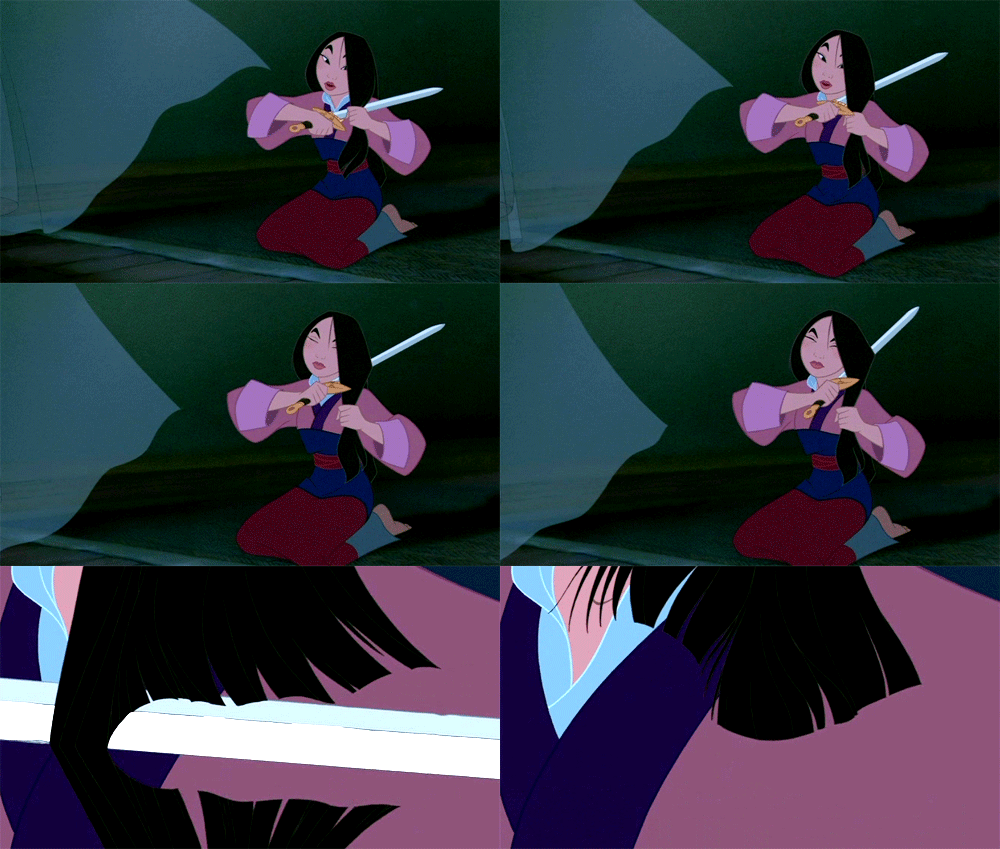
Before racing off to join the army in the middle of the night, Mulan makes a few quick adjustments to her appearance to help her pass as male. She slices off her hair with a sword, slips into some armour, and... that's it. The animators made subtle chances to her face to make her disguise more convincing, but seriously - she could be stuck in the army for months or years at a time, and the only thing saving her from decapitation is a vague hope that her funny-shaped ears are unfeminine.


She's shocked because she's picking up an FM easy listening station from the future.

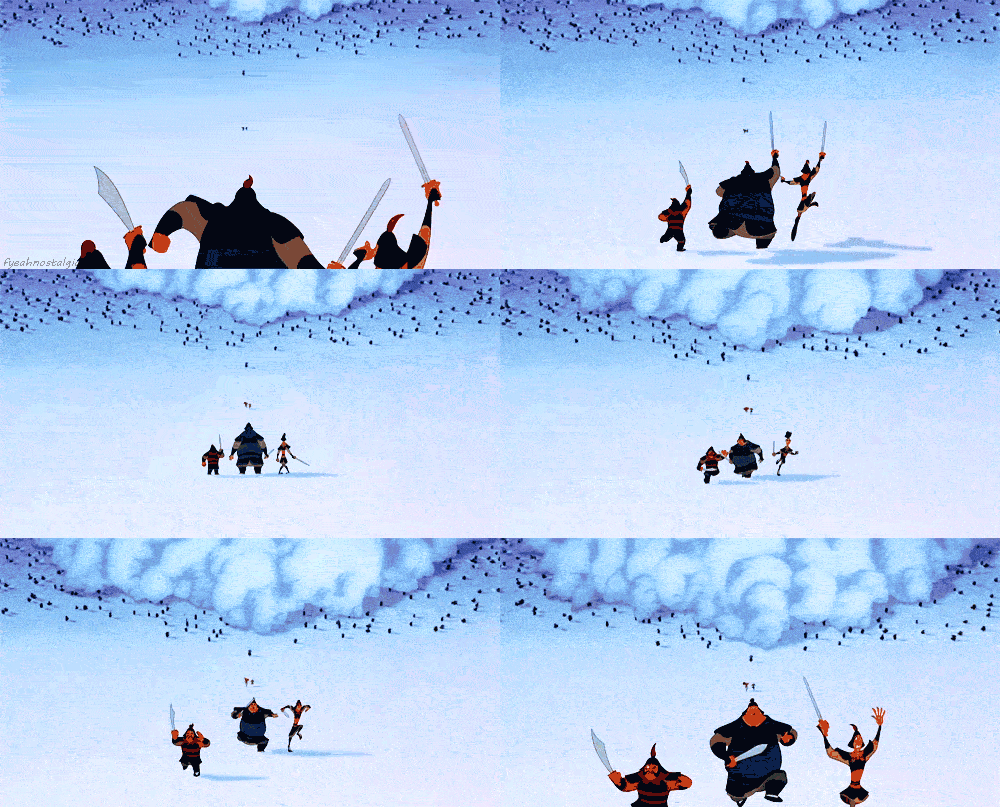
And when I say decapitation, I'm not exaggerating. Mulan happened to live in that wide, "most of human history" window when impersonation of the opposite sex was considered a capital offense. The movie never comes right out and says it - because there's no G-rated way of telling three-year-olds that the only reward for female heroism is death by having your head sawed off - but when Mulan's deception is finally revealed (sixteen-year-old spoiler alert), the movie does show us what would have been Mulan's execution scene. In some versions of the Hua Mulan legend, that really is how her story ends; she gives the army twelve years of excellent service and gets beheaded by a commanding officer for her troubles. 

Mulan, coming uncomfortably close to being the Chinese Joan of Arc.

But let's give Mulan the benefit of the doubt here. Contrary to popular belief, East Asians have just as much sexual dimorphism as any other race - they have the same weight-height ratios between males and females that most ethnic groups do. This actually gives Mulan an advantage. We can see from her lifestyle at the beginning of the movie that she comes from a wealthy family; no one in her immediate area has to farm their own food (they actually have the luxury of using fertile land to grow pretty gardens), her family can afford nice clothes, makeup, matchmaking services and fancy temples without complaint, and her parents are elderly, which means that her healthy, still-living grandmother must be positively prehistoric. Remember, she's living a historical stone's throw away from the birth of Jesus - living in that kind of comfort is no small thing. Compared to her same-age peer group, she's probably pretty well-fed, which means her physical stature most likely matches up to that of the average, under-fed boy. Fine. 

She also seems to have convenient, magical face-morphing abilities to help her out. She changes her facial structure and jawline to be more masculine, which is useful. She grows a widow's peak in her hairline from out of nowhere (Women have lower hairlines than men, which makes widow's peaks less pronounced, and you are more accustomed to seeing widow's peaks on men, since they're easier to spot on people with short hairstyles.) and she darkens her complexion, which is a particularly remarkable feat for a woman who spends most of her waking life in the shade of a roof, tree or parasol (You associate darker complexions with masculinity. Trust me on this one. You just do.) But that's a rant for another day.

Apparently DIY jaw and chin implants were a thing in the year 400.

No, Mulan's face isn't the thing that gives her away. We've all seen some slightly feminine-looking men and masculine-looking women in our lifetimes, but if you were raised by civilized humans, you probably didn't march up and demand to know the person's true sex. Facial features are graded on a bell curve with a heck of a lot of overlap between the sexes - "Ping" isn't overly suspicious-looking. It's not Mulan's hesitation and general weirdness around bathing that gives her away either. In every group of people, you're bound to find one or two who keep to themselves and don't relish the thought of scrubbing their junk in public. Not even Mulan's physical strength - or lack thereof - gives her away; physical strength also grades on a curve, with enough overlap that you'll find generous quantities of women who can out-run, out-jump and out-water-polo most average men. Even Mulan has her moment in the sun - she figures out how to shimmy up a pole with two weights before anyone else can.

And that little trick is exactly what should have given her away. 

Whoops.

See, one of the most consistent human sex differences is the distribution of strength in the body. Women mostly depend on their lower body strength; on average, women have proportionally larger thighs than men, and can match lower body strength with an average-sized male. When it comes to comes to upper-body strength, however, men have a clear advantage. An average woman has roughly half the upper body strength of an average man. This is due to two things - women tend to have smaller upper body muscles with weaker skeletal attachments, and women also tend to have more fat stores in the upper body, since their veins are full of hormones that constantly scream "PREPARE FOR INCOMING BABY" whether she likes it or not. You can't train this difference away. Even among super-elite athletes who spend their whole lives grunting into protein shakes and wearing Lycra because they can, man have the upper hand (Ha ha. This is what my humor has become.) in the upper body department. 

So what does this have to do with Mulan's climbing? 

Go ask a young, reasonably athletic male to shimmy up a vertical pole. In case there aren't any in your immediate area, I'll have this young man demonstrate:

Brought to you by "Big Willy D".

That's the easiest way for a man to climb a pole. They use their legs to grip and hold them in place, and then they use their allegedly hulking man arms to pull themselves upwards, shimmying with their legs so they don't slide back down. It takes advantage of the male body's natural strengths and conserves effort. If a guy wants to climb a pole with two weights, all he has to do is tie them to his ankles; he'll have to exert a little more effort to pull himself up, but he won't be thrown off-balance. 

Scroll back up and compare that to Mulan's climbing. She's not using the weights like that because it's clever and flashy - she's using them because it is literally the only way she's able to get up the pole. Instead of bracing herself with her legs and pulling with her arms, she's compensating for weak upper body strength by using her own weight to hold her in place so she can get her legs under herself and walk up the pole. All it would take is one little misstep to upset this delicate counter-balance and turn this two-dimensional character into a two-dimensional red stain on the ground below.

Ouch.

The fact that Mulan's little trick with the weights gets her hero status - instead of tipping off the captain that she's got womanly biceps - is nothing short of a Disney miracle.

Her father was never in any real danger.

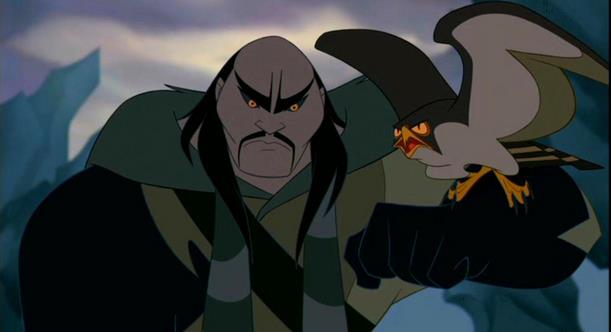
As reckless and transparent as Mulan is, there's a method to her madness - she's just trying to keep her aging father from having to serve in the army. The military summons Mulan responds to wasn't sent out so that they could camp out together doing icebreakers and karate lessons together - the Chinese are about to face a serious invasion from the ruthless Hun tribe, led by an apparently-immortal falconer with a very serious eye disease.

Seriously, dude, you should get that looked at.

It's made very clear throughout the movie that the situation is desperate, and China needs all the men it can get - even if they're too old to fight. Mulan's father is elderly, and walks with a serious limp, relying on a cane to get himself around. It's clear that if he went off to war, he'd end up as cannon fodder for the Huns; the Chinese army doesn't care if he can defend himself or not, so long as he can stand upright and hold onto a sword. Mulan's whole family knows that he has no chance of returning from battle alive - his daughter's haphazard attempt to take his place is her only chance of saving her father.

At least, that's what the movie leads you to believe.

This is no place for an old man.

Mulan's summons scroll takes her to a training camp in the countryside, where new recruits undergo the physical and mental training they need to take on the Hun army. For what appears to be weeks, the men practice fighting with bamboo poles, carrying weights on their shoulders, hopping across rivers on rocks, picking up individual grains of rice, and other skills that will doubtlessly be useless on the actual battlefield. 

Their plan to defeat the Huns with shirtless yelling was quickly scrapped.

All this training culminates in the beloved training montage song/college student battle cry "I'll Make a Man Out of You". During the song, Mulan falls behind in the training regime, gets kicked out of the army, and stages a dramatic comeback by shimmying her feminine ass up the pole to retrieve the arrow. Naturally, she's welcomed back into the army and instantly becomes the best at every activity, racing ahead of the toned captain who literally had to carry her weight just days before, because in the Disney universe, 'believing in yourself' is a performance-enhancing drug.

Yeah, you want to watch it again.

In case you missed the movie's gaping plot hole in the above paragraph, let me say it again: Mulan gets kicked out of the army. For poor performance. China is desperate for soldiers, and she's a healthy, able-bodied eighteen-to-twenty-something-year-old... and she still gets booted out for not living up to their rigorous training standards. Now imagine Mulan's father. He's so old and crippled that he has difficultly standing up without the assistance of a cane; when he tried to walk unaided to his armour, he limps so badly, he could churn butter just by holding a jug of cream in his hands. There's no way he can manage any of the running, jumping, swimming, fishing, archery or bucket-balancing rock-fencing required by the Chinese Boy Scout Summer Camp army training camp. Captain Shang would take one look at him hobbling to his tent and send him straight home to safety.
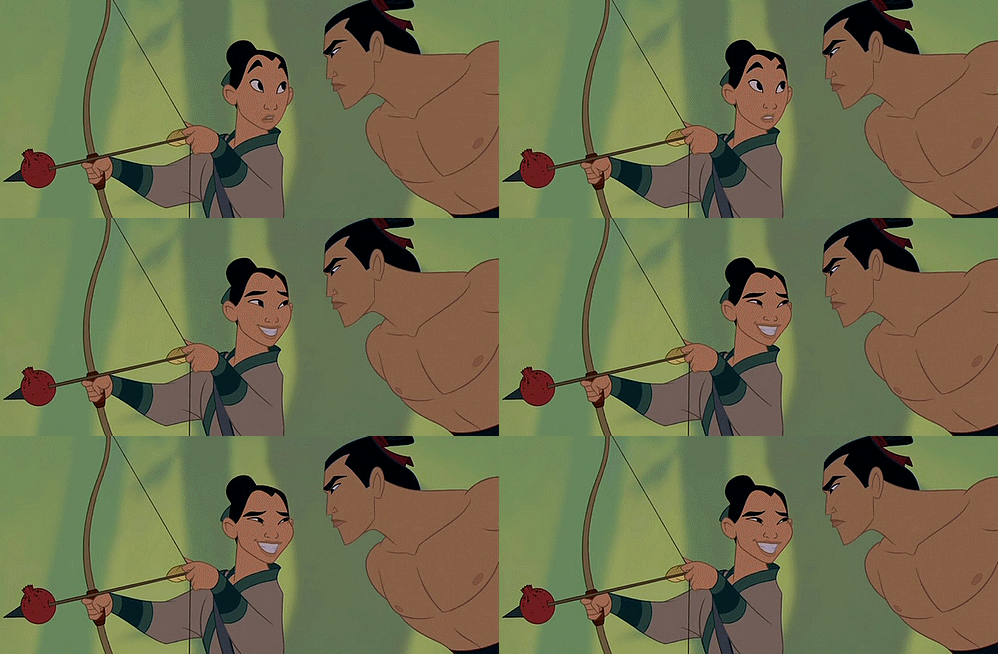
'Fake it 'til you make it' doesn't seem to work here.

Remember, Mulan is following the exact same set of instructions her father was given. It says "report to training camp", not "fling yourself under the sword of the nearest Hun". It should be painfully obvious, even to Fa Zhou's worried family, that he'll be turned away from the army before he ever has a chance to see battle. Mulan's story takes place 1,500 years before the 'one-child policy' was put in place; in that era, a family with no sons would be practically unheard of. The military summons was intended to recruit a strapping (but untrained) young man from every house, not a tired, wounded old warrior. 

This is not the hero China needs.

So what Mulan should have done was just leave well enough alone. She'd stay home, her father would go a brief, refreshing horseback ride before being immediately pitched out of the army, and Mulan could lead a happy life of sipping tea and tormenting the local matchmaker. Everyone wins. 
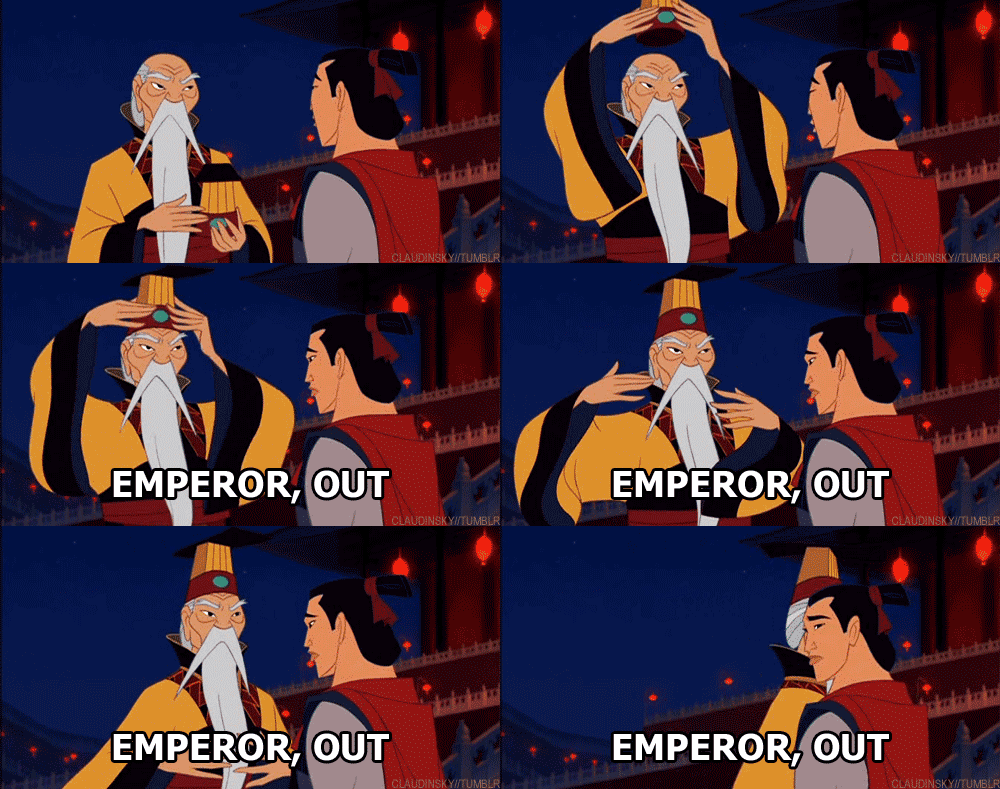
Except maybe the Emperor. But screw that guy.

How do you feel about Disney's first Asian princess? Leave it in the comments. Also, consider voting for me in the 'Best Funny Blog' category of the 2013 Canadian Blog Awards - anyone can vote!
13

Tangled vs. Frozen: How They're Secretly the Same Movie

On November 27, 2013, Disney released their 53rd animated feature film: Frozen. Based incredibly loosely on Hans Christian Anderson's pants-shitting nightmare story The Snow Queen - minus all the kidnapping, pedophilia and Satan, of course - Frozen has been hailed as the greatest animated movie to come out of Disney studios since the Spice Girls broke up. Audiences seem to agree - the film has raked in $813 million dollars worldwide, making it the second-highest-grossing Disney film ever released.

Yeah, yeah, we get it Simba, you're #1.

If you haven't seen Frozen yet, you need to. Immediately. For two good reasons:
  1. Until you've seen Frozen, you are an empty, joyless shell of the person you will be after viewing this film. Seriously. You are a skin-wrapped void where fond memories of an animated talking snowman, a self-aware reindeer and Disney's greatest song ever should be.
  2. If you haven't watched Frozen, this blog post is going to be a gigantic festival of spoilers.

You know you wanted to see this again.

Even if you haven't seen the full movie, it only takes one glance at a poster to recognize that Frozen is animated in the exact same style as Disney's first successful foray into 3D animation - Tangled. Both films feature protagonist with wide doe eyes, impossibly long eyelashes, tiny chins and whole lot of sideburns. It's not exactly hard to understand why; right from the beginning, it's obvious that the two movies were created with the same artists, programmers and sentient pieces of software that Disney rely on. Know what else Frozen and Tangled have in common?

Their entire freaking plot.

Subtle, Disney. Subtle.

On the surface, the two films couldn't be more different: Tangled is a heartwarming re-telling of Rapunzel (without the blindness or unplanned childbirth), and Frozen is a heartwarming re-telling of The Ice Queen (without enslaved children with chunks of mirror lodged in their eyes). Rapunzel is smothered by her overbearing mother and wants a glimpse of a royal castle. Princesses Anna and Elsa grew up in isolation without parents, and Anna dreams of stepping foot outside the royal castle. Totally different. But when you put on your nitpicking hat and really dissect the stories, you'll find that Rapunzel's story is just a combination of Anna and Elsa's stories. 

Don't believe it? Let's see if this sounds familiar:

The story starts with a young princess, who spends her entire childhood shut up in a castle/tower/stone structure of some sort. She was involved in a mysterious incident as a young child, and her parents desperately try to conceal her supernatural powers from the outside world. From a young age, she knows that there will be terrible - albeit non-specific - consequences if her magical abilities are ever revealed.

"Uncontrollable Ice Queen powers" might be slightly more difficult to hide than glowing hair.

And so the young princess grows up naive and restless, yearning for a chance to step outside her stone walls and take part in the world outside. She tries to while away the long hours with art (either painting it or conversing with it), but it's a poor substitute for human contact.

One of these girls is marginally crazier than the other one.

Everything changes, of course, when the princess reaches a milestone birthday and technically becomes an adult. For the first time, her world opens up, and everything she's been missing out on is there for her to explore. Of course, her newfound freedom is only temporary - she only has one day (Princess Anna) or three days (Rapunzel) to fulfill all her hopes and dreams before returning to isolation. No sooner is she left alone, however, than she has an unorthodox chance meeting with a man with well-groomed facial hair. 

If Flynn Rider and Prince Hans combined their facial hair, they'd almost have a full beard.

The princess sets off on a grand adventure to, er, find herself, or resolve her lifelong angst, or whatever it is she's doing. Shortly after setting out, she and her incredibly reluctant travel companion wind up at a dimly-lit establishment in the middle of nowhere, where the princess gets some unlikely help from a large, burly, potato-shaped man. 

A large, burly, potato-shaped man who is definitely in touch with his feminine side. 

The princess reaches the apex of her journey, and learns to lighten up and embrace the quirky teenager/palace-dwelling ice monarch that she truly is inside. In a weirdly specific shared plot point, she undergoes a personal transformation and becomes exponentially hotter with an elaborate braided hairdo. 

Either the animating software came with a "screw it, let's slap a braid on her" button, or someone at Disney has a braid fetish.

With her inner Zooey Deschanel character unveiled, the braided princess takes a long, hard look at her travel companion and realizes that he makes her feel all tingly inside. He's a scruffy, orphaned commoner from the wrong side of the tracks, and he's locked in an unnatural, empathetic bromance with a sassy ungulate, so by modern Disney standards, he's obviously her soulmate.

Next time, Disney, I demand a movie about a scruffy Canadian lumberjack and his beloved moose.

Just as it looks like the princess is about to board the 'happy ending' train and ride off into the sunset, with true love and large hoofed animal in tow, she's tricked into leaving his side and returning home. Things take yet another weirdly specific turn when the princess bravely sacrifices herself to prevent a traitor from her past from stabbing her loved one to death. 

Wow, that Flynn picture does not look so good out of context.

Disney isn't quite ready to actually have a princess suffer for her actions and spend the rest of her life as a dark-haired commoner with a dead boyfriend, or as a girl-shaped chunk of ice; naturally, everything works out for the better, and the princess re-claims her place as the most beloved member of the royal family. Most importantly, at long last, she's is finally in a place where she's happy and truly being herself. And how do we know that? Why, it's because her hair has finally returned to its natural colour, of course! And she even gets to kiss the guy!

Disney: masters of recycling.

Now, don't get me wrong. Disney can spruce up this same formula with cute characters and catchy songs from now until the heat death of the universe, and I will watch every family-friendly moment of it, assuming that I possess biological immortality I was otherwise unaware of. But there is a formula there. 

Like a lobster. Technically, these little fuckers can live forever.

What do you think? Are Tangled and Frozen two fancy re-tellings of the same story? Or am I on a special kind of crazy pills this week? Please, do let me know.


0

Over-Analyzing Disney: Why Gaston Isn't Such a Bad Guy After All

Quick, who's the villain of Beauty and the Beast? It's Gaston, right? Of course it is - he's arrogant, he's pushy, he's mean-spirited, and, most importantly of all, Wikipedia lists him as one. Sure enough, Gaston devotes every second of his screen time to being vapid and controlling as he relentlessly tries to force Belle to marry him and push out a basketball team's worth of copies of himself. There's no way anyone could argue that Disney's youngest villain isn't a hairy pile of pure evil with a ponytail, right?

Despite having the hairline of a 47-year-old man, Disney alleges that he's actually around 25.

Wrong! In keeping with last week's post about villains and children's cartoons from the 1990s, I decided to use this week's post to meticulously comb through a 22-year-old Disney movie to examine whether or not Gaston, narcissistic huntsman and antler aficionado, is really such a bad guy after all.


For now, we're not going to count his gratuitous chest hair as a crime.

When you're deciding whether Gaston is malicious or just misunderstood, keep in mind that:

He's illiterate. 

People who don't like books are awful, knuckle-dragging, mouth-breathing embarrassments to human evolution, and they deserve to be thrown into tar pits so that their preserved bones might at least have some educational value to people living tens of thousands of years from now. Any child or librarian could tell you that. And so when Gaston casually tosses Belle's precious book into the mud, that's really all we need to see to know that he deserves to be thrown off the top of an improbably high tower.

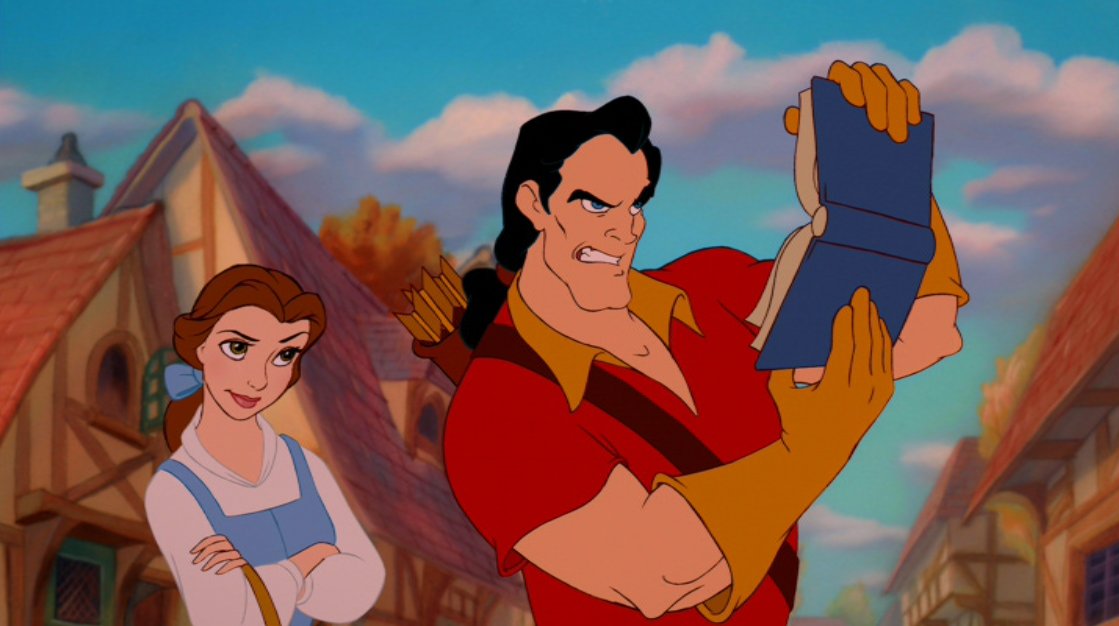
Here, Disney plays a clever game of "spot the pornography joke".*

This is where a wonderful thing called 'historical context' comes in. The movie never actually specifies what year they're supposed to be living in, but the coexistence of bookstores and chamber pots points to sometime in the mid-18th century. For those of you who spent every single history class of your life snorting cocaine instead of paying attention, the 18th century was not a particularly great time for book-learnin'. Unless you a) had a penis and a royal title, or b) had a family whose livelihood depended on knowing their ABCs, chances are, no one would ever bother to teach you to read. Gaston is a huntsman. His entire job is to shoot things. Of course he tosses Belle's book aside; her passion for reading is the 18th-century equivalent of spending all day tinkering with an obscure programming language. Belle herself shouldn't be so high and mighty about it - her own ability to read is just sheer dumb luck. If she'd been born to almost any other villager besides the inventor, her perky, illiterate ass would be parked right next to Gaston's blonde admirers on that bench. 

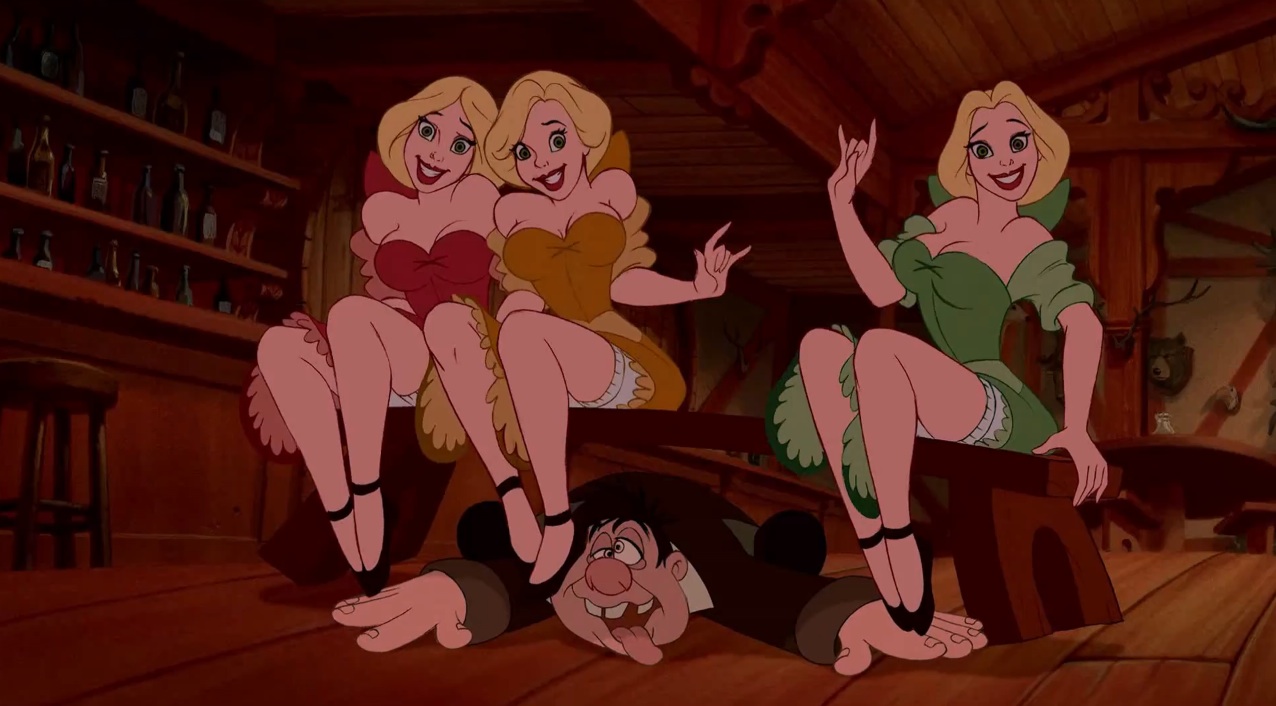
They're waiting.

The fact that they live in the 'pooping in pottery' era of human history aside, Gaston isn't the brightest human being to ever grace the Earth. And that's not his fault. His full name, Gaston LeGume, literally translates to "The Vegetable of Gascony", with "Gascony" referring to the real-life French province where they live. He's a few croissants shy of a dozen, is what I'm saying. His world is comprised of muscles, guns, and holding metaphorical dick-measuring contests in the town bar; books aren't even on his radar. That might make him a poor match for Belle, but can we really claim that that makes him a bad person? I posit that we cannot.

Brains are not his strong suit.

Belle should want to marry him.

The definition of an ideal marriage is a multi-billion dollar question that could be the sole subject of entire blogs by itself. No matter how you feel about couples with matching genitals, however, most people in the Western world do agree on one thing: couples should at least be able to stand each other before they get married. In fact, they should ideally be quite fond of each other. If they really want to go the extra mile, they might even find some things that they have in common with each other before tying the knot. That's what makes Gaston's proposal to Belle so ridiculous - they have nothing in common, while Belle and her true love, Prince "The Beast" Adam, bonded instantly over their mutual love of, uh... eating porridge with their faces?

Ladies, control your trembling loins.

Except, once again, the fact that Belle was born in the year "17-something-something" is an issue. In her time, marriage wasn't about finding someone to have deep conversations with through the night. It was about finding someone who was capable of preventing your ass from starving. Remember, as a Renaissance-period woman, Belle doesn't have any career options open to her that involve keeping her knickers on. If she doesn't want to end up in the world's oldest profession when her father dies, she needs a husband, and a girl could do a lot worse than Gaston. 

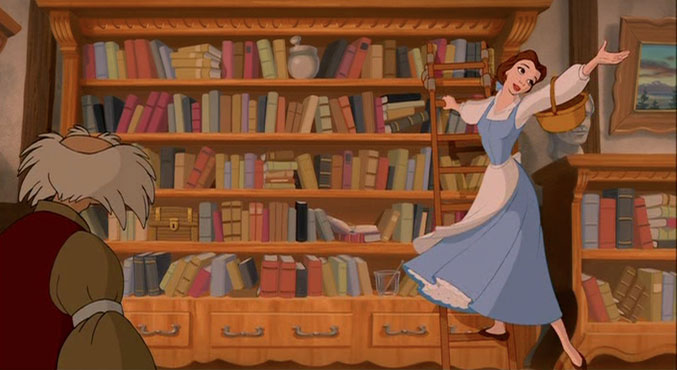
People who read to sheep in public fountains don't usually have great marriage prospects.

He may not be her soulmate or intellectual equal, but Gaston is more than capable of providing for her. He's popular. He's successful. In an age where the average man spends his entire life coughing up blood and chunks of lung until he drops dead from yellow fever at the ripe old age of 35, Gaston is almost unnecessarily healthy. He's not looking to love her and leave her penniless; Gaston makes it uncomfortably clear that he intends to have a life with Belle and raise a family together. If she wants her essential needs covered, with a little extra money left over for books, she shouldn't be so quick to turn her nose up at the town's most eligible bachelor.

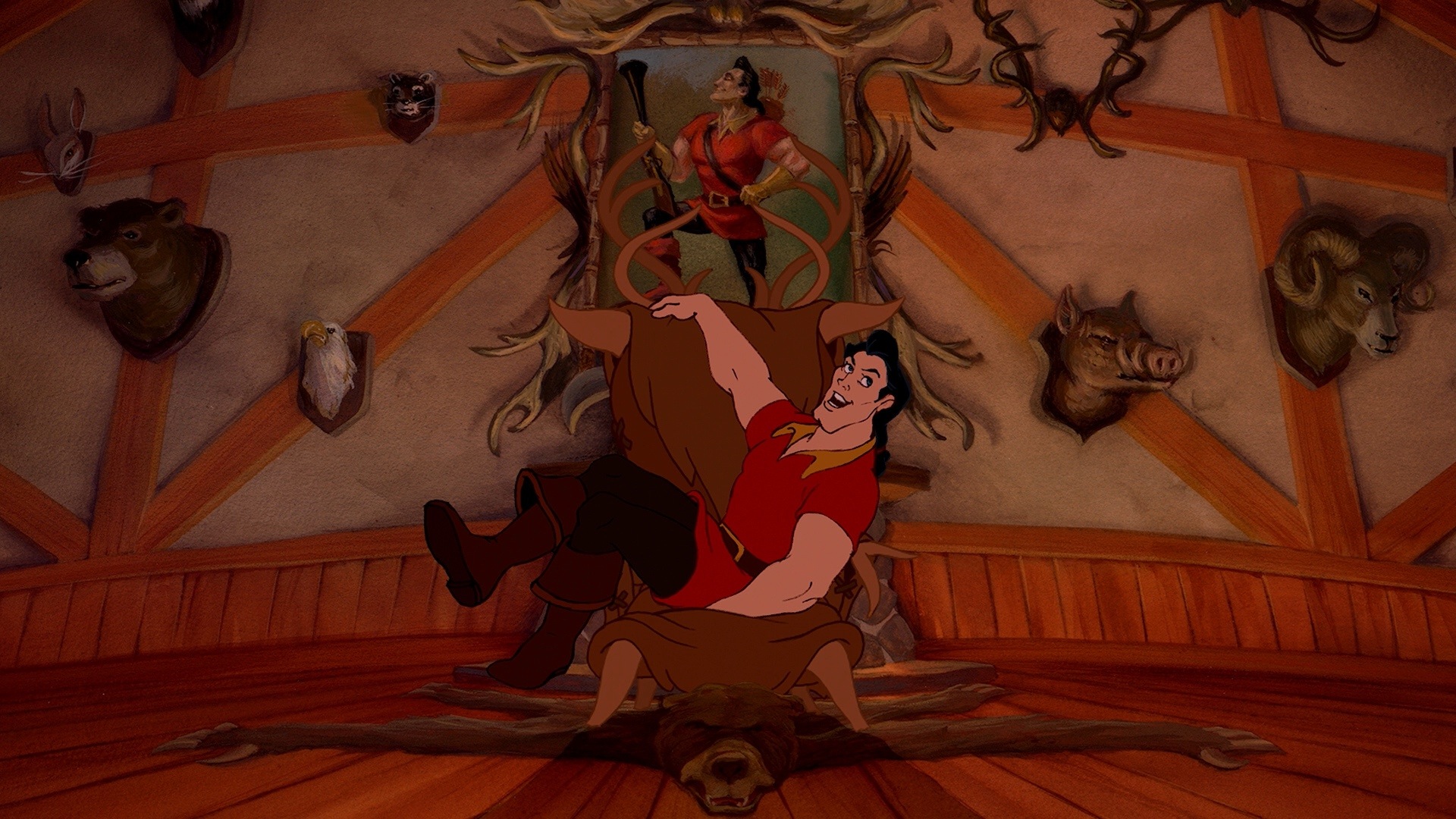
And just think of all the antlers she'll have.

His beliefs are justified.

Imagine, for just a moment, that you wandered out of your house one day and saw the object of your unrequited affection in the arms of a four-headed green alien. Would you wait patiently for your crush to explain that the alien is actually a lovely individual and a generous lover? Of course not. You'd run screaming into the house to find the biggest projectile your little noodle arms can lift, so you can hurl it at the monster and rescue your beloved. So when Gaston's first reaction to seeing the Beast is to rally the villagers and head off on a late-night murdering adventure, is that really so hard to understand? He hunts animals for a living, he wants to marry Belle, and his IQ is room-temperature at best. How else is he supposed to react? He's the village's entire supply of testosterone; they're hardly going to be receptive to him suggesting that they embrace the beast as a source of diversity in their currently-monsterless town.

He just wants a hug.

Another one of Gaston's more questionable beliefs is his belief that Belle is the absolute ideal wife, just because she's just so gosh darn pretty. Isn't he a horrible person for choosing a spouse based on looks alone? Well, actually, he's got one imporant thing on his side. It's just basic human instinct - even without a formal education, the dark recesses of our brain have a loose understanding of how genes work. If you don't want to have potato-shaped children, you don't choose a potato-shaped mate. Your body doesn't steer you towards attractive, symmetrical people for no reason; even if you don't consciously want strong, plentiful children, you can bet that your loins do. Gaston has doubtlessly been raised to believe that wives are supposed to be decorative offspring factories, not best friends or companions. Besides, beauty is a famously subjective trait - Gaston is coveted by a set of gorgeous blonde triplets who would murder a flock of ducklings just for the chance to comb his chest hair for him, yet in his eyes, no one is more beautiful to him than the arguably-less-conventionally-attractive-Belle. Doesn't everyone think the object of their affection is the most attractive human being around?


And just look how symmetrical she is.

Besides, if you're going to throw stones at Gaston for over-valuing Belle's beauty, you'd better bring enough for the entire village. Why? Belle has no friends in the village, claims over and over that she doesn't fit in, and runs around singing about how they're all boring peasant cogs in the French provincial system. And yet, the entire village trips over themselves to talk to her and about her. They can't seem to shut up about her, even though she's done exactly nothing remarkable. And through it all, the villagers make it perfectly clear that the only reason they're putting up with her anti-social, book-reading bullshit is because she gives them something pretty to look at.

Something seriously lacking in this town.

While we're on the topic of Belle, Gaston makes his opinion of her hobbies known right from the start of the movie. Women shouldn't read or think, he says. How could he possibly justify something so outrageously misogynistic? Again, it comes down to sweet, sweet, wife-beating history. Up until the women's suffrage movement of the early 20th century, real, actual medical doctors with real, actual credentials believed that women didn't have enough blood to power their brains and their reproductive systems at the same time. If a woman was foolish enough to go to university or hold public office, it was believed that woman's womb would be so terribly deprived of blood that she would actually become sterile. So when Gaston tells her she shouldn't be doing any pesky thinking, he's not inflicting his own personal brand of sexism on her; he's concerned about her actual physical health.

Get down from there before you sprain your uterus.

He's just like the Beast.

When my small, mushy, 5-year-old brain first took in this movie, I thought that Gaston and the Beast couldn't be more different. Gaston was a bully with a mean streak; the Beast was eccentric and misunderstood. But after re-watching the film with my 21-year-old mature brain that still very much enjoys Disney movies, I gradually realized one very important thing that should completely exonerate Gaston from 'villain' status. Are you ready for it?

Gaston and the Beast are almost exactly the same person.

Let's start from the beginning. Gaston chooses Belle to be his own personal baby factory because she looks nice and she won't produce children with weird eyes and crooked teeth. Yes, by today's standards, that makes him kind of an asshole. But what about the Beast? He doesn't set his sights on her for her vivacious personality and delightful conversation. He just needs a girl to break the curse. Any girl will do. His requirements begin and end with a functional vagina. She could be three hundred pounds and covered in a delightful smattering of multicoloured pustules, but so long as he can force himself to fall in love with her, it's all good. Lumiere and Cogsworth literally refer to her as "the girl" right up to the end of the movie. The Beast can't claim moral superiority over Gaston here - she's little more than a trophy to either of these men. Who knows - if Gaston had saved her from those wolves and had his own subsequent bonding moment montage, maybe Belle would have grown to love him instead.

As if she could ever compete with the love he has for himself.

Of course, Gaston has a much darker side than his normal bravado might lead you to believe. In his most heinous act in the entire movie, he blackmails Belle into marriage by having her father, Maurice, committed to the insane asylum. If you keep in mind that this is a hellish, 18th-century approximation of an insane asylum, Gaston's actions are downright chilling. It's hard to believe that anyone other than a villain would employ such tactics. Oh, but hang on, imprisoning Maurice to gain leverage over Belle sounds awfully familiar. Where else have I seen that used?

Hint: This scene does not take place at Gaston's house.

Oh, yes. The Beast does literally the exact same thing. She trades her father's freedom in exchange for a promise to never, ever leave the Beast, which is essentially the Cliff's Notes of any wedding vow. When she's permitted to leave the castle to save her father from freezing to death in the snow, that's supposed to be a huge allowance on the Beast's part. But it's not all bad for Belle. I mean, the Beast has a sprawling, impractically gigantic library! How could a person who owns so many books not be a perfect match for Belle? There's just one little problem - those books clearly came with the castle, because the Beast is every bit as illiterate as Gaston.


Some of you might recognize this as the scene where Belle quite literally teaches him to sound out the word "two".

In fact, throughout the entire movie, Gaston is perpetually just one little script edit away from actually becoming the hero of the story. If he had been put under an ugly spell as a child instead of Prince Adam, this would be a heartwarming story about Belle falling in love with a simple villager instead of an arrogant prince, and no one's character would have to be any different in the slightest. If Gaston had believed Maurice's claim that Belle had been captured by a horrible beast, he could have easily realized that he truly loved her and rescued her from the Beast's clutches before she was neck-deep in Stockholm Syndrome - Disney has sold us on far less believable changes of heart before. 

And we know Disney has no problem with the 'pretty girl chooses handsome guy after all' ending.

Even the final scenes didn't have to turn out as they did. Again, any quasi-talented, mostly-sober scriptwriter could find a dozen different ways to turn handsome, confident Gaston into a Disney prince instead of Prince Adam. If the timing of the final battle was off by even five minutes, remember, the Beast would have remained a Beast forever. Perhaps Gaston could have had a change of heart upon seeing that the beast wasn't such a monster after all, and the Beast could have stepped aside, refusing to let Belle spend her entire life with a twelve-foot-tall lion/buffalo hybrid. Even if the original "Belle ends up with Disney's first redheaded prince" ending is preserved, there's no real reason for Gaston's story to end the way it does. The Beast proved he was a better man by sparing Gaston's life. Any reasonable fictional character would take that as a sign that it's time to quietly slink away and re-think every terrible choice he's ever made. Having Gaston subsequently stab the Beast and get flung off the roof for his efforts only works because Disney wanted a more dramatic ending, and Disney fans demand that every little transgression is punished by death.

The children demand blood. 

Gaston may be an uneducated, selfish, egotistical buffoon, but he's a far cry from the cold-blooded sociopathy of his fellow Disney villains Queen Grimhilde, Maleficent and Jafar. You want to know who the real evil is in Beauty and the Beast? How about the Enchantress, who sentences dozens of innocent people to live as sentient housewares for no other reason than they were unfortunate enough to work for a prince who's kind of an ass. 

That was not a nice thing to do.

How do you feel about Gaston? Are you convinced that he's just an idiot in the wrong place at the wrong time, or do you still think he's earned a spot among Disney's most dastardly villains? Sound off in the comments.

* In case you somehow missed it during your childhood viewings of 'Beauty and the Beast', Gaston's confusion about the lack of pictures and insistence on holding the book vertically are meant to imply that he's used to looking at old-fashioned pornographic magazines. Take that, childhood innocence.
25
Back to Top