Showing posts with label Harry Potter. Show all posts

Mirror, Mirror, on the Wall, Who's Most Prolific of Them All?

So a little while ago, I came across this article. For those of you who have a pathological fear of hotlinks, the article discusses the fact that the Game of Thrones producers are going to have to start pulling wacky Hodor adventures out of their collective butts to keep the show running, because they are about to run out of book. The show's fifth season will encompass both the fourth and fifth novels - because the fourth book is completely filled with brand new identical white guys to memorize, and the fifth book takes place concurrently - with the sixth novel not expected to come out in time for the filming of season six. This means the writers are going to have to take the few things they've been told about the series ending and magic up ten episodes.

Spoiler Alert: Winter isn't the only thing that's going to come.

Of course, George R R. Martin's notoriously slow writing isn't news; in an interview I sat in on with Lena Headey and Peter Dinklage, the Lannister actors mentioned that the author has been all but banned from the set, because the time he spent there was hindering the already-glacial progress on his books. Just how slow does George Raymond Richard Martin write? Somewhere between 240 and 356 words per day, using a metric that the article's author Walt Hickey calls 'final words written per day'.

0

In Defense of Ron and Hermione

This past week, J.K. Rowling dropped thousands of jaws and fanfiction writers' panties when she announced that she regrets pairing Hermione Granger with Ron Weasley, and in hindsight, she would have married the brilliant witch to the story's hero -  Harry Potter himself. Rowling has always been open about the fact that Hermione Granger is a thinly-veiled depiction of herself, and has been quoted as saying that her initial decision to marry Hermione and Ron was "a form of wish fulfillment", a statement that forces me to assume she lusts after the loins of skinny, impoverished gingers on a regular basis.

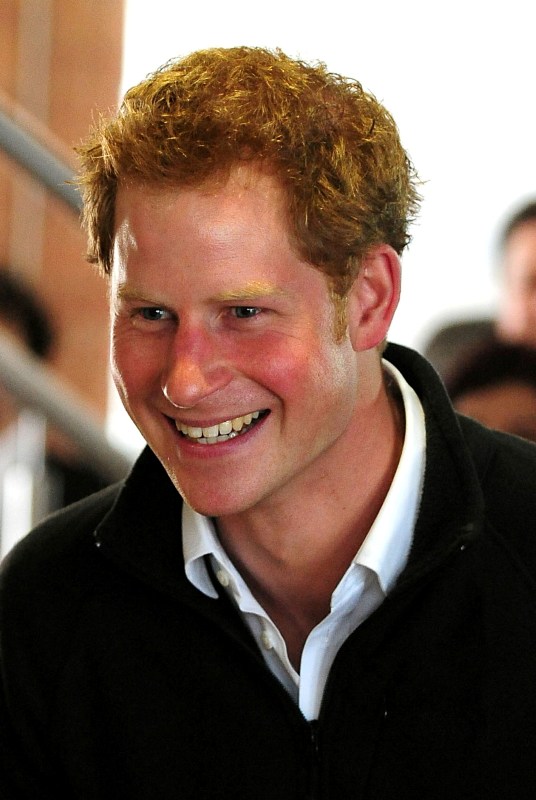
Which means that, with the Queen down to her last million dollars, Rowling should be getting ready to accost Prince Harry any day now.

Reactions to the interview have been mixed, to say the least; supporters of the original ending are gathering up their torches and pitchforks to defend the Weasley-Granger matrimony, while Harry/Hermione supporters are snorting celebratory cocaine off their laptops and writing boatloads of celebratory and newly author-sanctioned Harry/Herminione erotic fanfiction.

Harry/Draco supporters are still waiting for their day in the sun. 

I fall firmly in camp Ron/Hermione, and I have since the very beginning. Putting the two of them together subverts the whole "hero gets the girl" trope - something that's fairly important for a series so steeped in cliches it might as well be tea - and it presents Hermione as a thinking, feeling person, instead of a human prize to reward Harry for conquering mean old Voldemort. Plus, people have compared me to Hermione Granger my entire life, and I took it to heart so much that I ran out and got myself my very own Ron.

Which makes dressing up for comic conventions so much easier.

But it's not my personal feelings that drove me to wrote this post, and I'm not even going to touch the debate about whether or not authors have the right to change their stories years after they've been published. No, I'm opposing J.K. Rowling's Harry/Hermione revelation with her own words; the personalities and events she assigned to her characters are more than enough evidence for why Ron/Hermione and Harry/Ginny should end up together. Consider that:

Harry isn't the most appealing guy in Hermione's life.

To the man-fancying ladies and gentlemen of my blog: let's say I've got a young, reasonably attractive single guy that I'd like to set you up with. There are just a few things you need to know about him. He's an orphan, and he spends approximately 7/8ths of his waking life being angry about that fact. The other 1/8th of his life is devoted to angsting about being orphaned, even though he has absolutely no recollection of his parents or the night they died. His greatest accomplishment in life is a disfiguring facial scar, which, like every other thing he's ever achieved in his life, was the result of someone else's actions. He's such a terrible judge of character that he spent seven years railing on a man who risked his life on multiple occasions to help him, just because the man happened to have less-than-stellar personal hygiene and chose 'skulking' as his preferred method of locomotion. This guy's exceptional decision-making has also lead him to commit grand theft auto, confront a convicted serial killer by himself and lead several of his friends into their untimely graves. Oh, and if that's not enough for you, he also has a 24/7 psychic connection to Voldemort. Or whoever the real-life equivalent of Voldemort is. So... probably Vladimir Putin. 

Yes. Definitely Vladimir Putin.

Now tell me, do you want to meet this man? I posit that you do not. Harry spends most of his time after the fourth book being a confrontational and emotionally unavailable Vladimir Putin mind-twin, and Hermione is there to witness every meltdown and screaming fit along the way. With the exception of Ron storming off in the seventh book, the trio spend most of their time in a cycle of Harry blowing up, Ron calming everyone down, and Hermione finding a sensible way to work through their problems.

This is 90% of Harry's emotional range in a single photograph.

In fact, there are a few times when Ron and Hermione themselves become the target of Harry's wrath, mostly when he's throwing hissy fits about things that are in no way Ron or Hermione's fault. He has a tantrum at Number Twelve, Grimmauld Place because Dumbledore made him spend his summer in a safe, comfortable Muggle suburb with people who are too afraid of him to challenge even his slightest whim, and he has a similar meltdown on the two of them when Ron gets upset at being treated like his funny little ginger sidekick. If Harry has even the slightest hope of scoring himself some sweet, sweet Hermione lovin', this is the worst thing he could be doing. By constantly putting his friends on the defensive against him and forcing them to tiptoe behind his back, like he's some kind of savage, magical hyena, he's actually strengthening the bond between them by uniting them against him. And years of forcing Ron and Hermione to be partners in crime can have only one possible outcome - they become permanent partners, the kind who don't always have to wear pants. Ginny, of course, witnesses very little of this. She is never the brunt of Harry's wrath, even when she's stupid enough to take orders from a talking toilet diary that almost gets her killed, which is probably why she agrees to marry him. 

Harry has a type... and Hermione doesn't fit it. 

Some people have a "type", which is a fancy way of saying that they date the exact same type of person over and over and then act surprised when it doesn't work out. Harry might not date a lot of women, but he dates just enough to let us see that he has a type. Throughout the Harry Potter series, the titular character is romantically linked to a grand total of four women - he's interested in Cho Chang and Ginny Weasley, he goes on a date with Parvarti Patil, and he dodges the affections of Romilda Vane. These are four very different people, but if you look closely, there is something that separates the women he wants from the women he doesn't - including Hermione. 

Just because the entire internet wants her, doesn't mean Harry does too.

Ginny Weasley is a Caucasian Gryffindor student one year younger than Harry. Cho Chang is an Asian Ravenclaw one year older than Harry. They seem completely different on the surface, you racist bastard, but let's take a closer look. Cho Chang is characterized as being kind, timid, and delicate. She's a tiny, very pretty girl with sleek hair and freckles. When she first appears, she has a naive, innocent nature, though she later toughens up after an indirect encounter with Voldemort and joins Dumbledore's Army. She's one of the only characters to be depicted openly crying during the books, and she's one of the only women to play on a house Quidditch team. Ginny Weasley, on the other hand, is depicted as being kind and timid around her long-time idol, Harry. Her family prevent her from roughhousing with her brothers, as she is regarded as being too delicate for that. Physically, she's described as being tiny and extremely pretty, with freckles and long, sleek hair. When she first appears, she's naive and innocent enough to be taken in by Tom Riddle's diary, but after surviving her encounter with the Horcrux, she toughens up and joins Dumbledore's Army. She is one of the only characters to be depicted openly crying, and she's also one of the only women to play on a ... you see where I'm going with this.

These are essentially the same person.

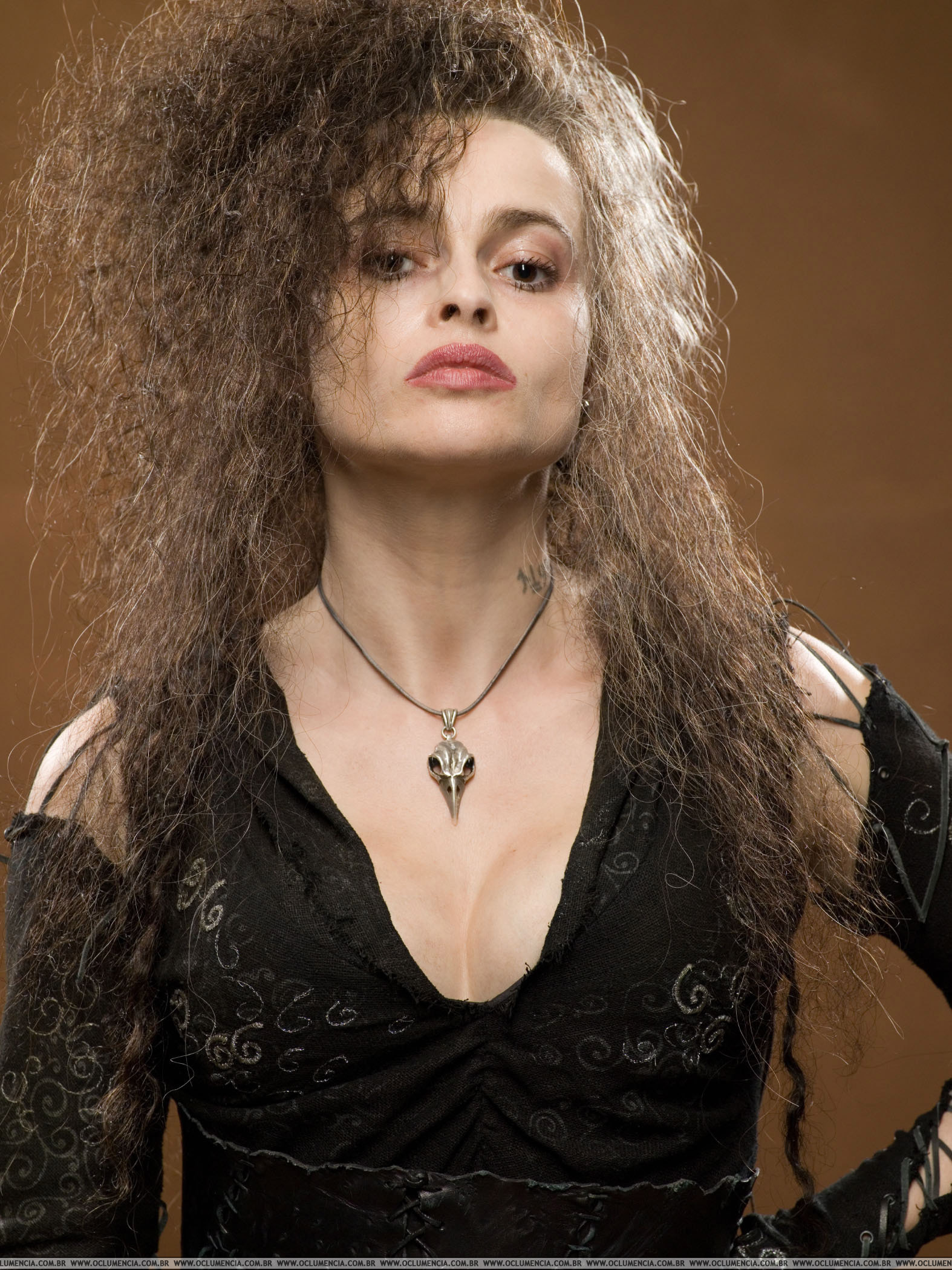
Hermione - along with Parvati Patil and Romilda Vane - falls well outside Harry's unnervingly specific criterion for romantic partners. For one thing, these women are much more outspoken and direct; Parvati nags Harry to be a better date, Romilda actually resorts to chemical warfare in a bold attempt to win him over, and Hermione spends most of the series telling Harry what to do to keep his Boy-Who-Lived ass alive. Furthermore, Hermione doesn't even come close to meeting Harry's physical standards. Emma Watson may be an internet Goddess whose status is rivaled only by Jennifer Lawrence's, but in the books, Hermione is described as being bushy haired and bucktoothed. When she throws on a dress and runs a comb through her hair for the Yule Ball, her friends and classmates actually have astonishing difficulty recognizing her. She does eventually find a sneaky way to deal with her chipmunk-toothed problem, only to fall into the clutches of Bellatrix Lestrange a few years later and become disfigured when a racial slur is carved into her forearm. 

Not cool, Bellatrix.


So Rowling can talk about 'wish fulfillment' all she wants - she set up Harry with wishes of his own, and they don't involve his bushy-haired friend. 

Hermione needs to be a know-it-all.

If you look over at a classmate and call them a "Hermione Granger" - something that has happened to me many, many times - chances are, you're not paying them a compliment. You're pointing out that they spend so much time with their hand in the air that their fingers have gangrene, or that they spend so much time reading they have to manually re-moisten their eyeballs with a sponge. Hermione is fully aware of what her 'keener' status is doing to her reputation - an actual teacher, who would normally encourage these things, docks her house points for being, and I quote, "an insufferable know-it-all". So why does she keep acting that way? There are really only two explanations; either it's some sort of deep-seated compulsion she has, like an academic Tourette's syndrome, or else she just gets off on knowing trivia that other people don't. Either way, it's pretty clear that Hermione isn't going to change anytime soon.

Hermione in her natural habitat.

So if Hermione's habit of correcting other people is built-in, unalterable and potentially necessary for her to achieve sexual arousal, she's only going to be happy if she finds a partner who:

1. Is in constant need of correcting. 
2. Marvels at her brilliance on a regular basis. 

And if you look around Hogwarts based on those two criterion alone, it's Ron "Not the spiders" Weasley who meets them the best. No other character in the entire series operates on the same redheaded-stepchild logic that drives Ron to be the single most quotable person to appear in the franchise.

Pictured: the appropriate reaction to almost everything that comes out of Ron's mouth.

And that's exactly what Hermione needs. Think about what happens every time the trio runs into some kind of danger. Hermione figures out exactly what the team needs to do, from preventing Harry from drinking poison in Book 1, to remembering to pack spare clothing when the pair sets out for a year of camping in Book 7. And the boys' reactions are always the same. Harry snatches up whatever help Hermione is offering, beats his chest, screams "I AM THE CHOSEN ONE" and runs off to find more danger for Hermione to deal with for him. Ron, meanwhile, tends to stick around and let Hermione know just how clever and brilliant she is. Book by book, Ron makes it clear that if a know-it-all is in the market for a partner, he's really the obvious choice.

Ginny Weasley is a stand-in for Lily Evans. 

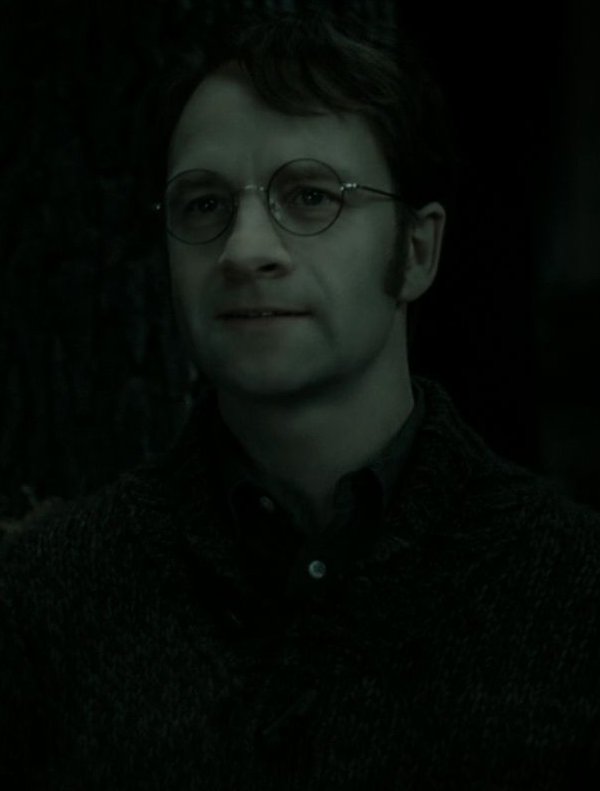
J.K. Rowling is more obsessed with the circle of life than Mufasa ever was. All of her books deal heavily with inter-generational relations, and the quasi-depressing idea that we're all doomed to do more or less the same stupid things that our parents did. This is hinted at throughout the book - Neville bravely confronts Voldemort like his parents did, the Weasley children grow up to be a combination of quirky and bureaucratic like their father, Teddy Lupin is a Morphmagus like his mother, and so on - but no one is a better example of a parental clone than Harry himself. Harry essentially assumes his father's life - they are almost identical in appearance, they were both Gryffindors who played for the house Quidditch team, both are close to Remus Lupin and Sirius Black, they both make liberal use of the invisibility cloak, both are killed by Voldemort, and both have a tendency to be arrogant shitheads.

I refuse to believe that those glasses were trendy for over forty years.

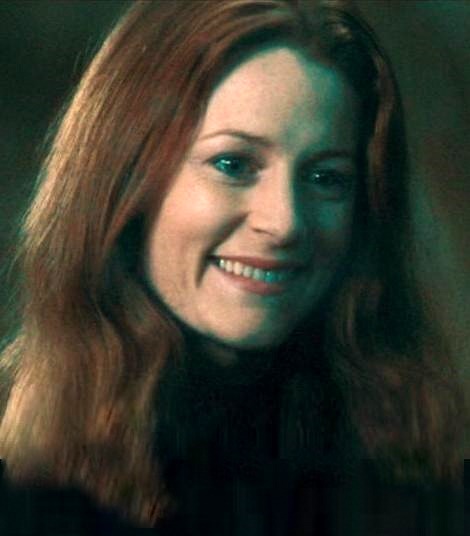
Whether intentionally or unintentionally, Harry seems determined to be a younger, angstier and hairier James; it's only natural, then, that he should make everyone around him uncomfortable by chasing after his very own Lily. Lily Potter (nee Evans) was a redheaded witch of low birth who spent most of her childhood fully aware of her magical powers and anxiously awaiting the day she'd finally get to go to Hogwarts. At school, she was revered for her intelligence, good looks, wit and stubborn, sharp-tongued charm. Her potions teacher, Professor Slughorn, was so delighted with her that he inducted her into his apparently-prestigious Slug Club, where students stand around in fancy outfits and try not to be eaten by vampires. Slughorn wasn't the only male to notice her, either; she was wildly popular at school, and spent most of her later years fending off the affections of multiple boys. 

Nope, no Oedipus complex here. No, sir.

Do I even need to spell it out? (Pun possibly intended. Sorry.) Ginny is a redhead of low birth who spent much of her childhood fully aware of the magical community and longing to get on the Hogwarts train. She, too, was a member of the Slug Club, revered for her good looks, wit and fiery-headed charm. She spends her later years at school being constantly inundated with the affections of her male classmates, to the point that her brothers, Fred and George, threaten to intervene. 

Yeah, good luck with that. 

Hermione may be a lot of things, but she's no substitute for Harry's deceased mother. Sure, she's clever like Lily, and yes, she comes from a Muggle-born background, but that's where the similarities end. Hermione was completely oblivious to her supernatural powers during childhood, and only clued in to her abilities when a Hogwarts representative turned up at her dentist parents' doorstep. While Lily was kind and charming, Hermione almost inevitably comes across as abrasive and insufferable to everyone who's not as smart as she is. Far from being coveted by every student with a Y chromosome, Hermione is ignored by men - the only exceptions being Viktor Krum, a Bulgarian Quidditch player who knows her for less than two weeks, and Ron, her eventual husband. So if Rowing's goal was to show us how life comes full circle, she doesn't need to go back on her decision to marry Harry and Ginny - she got it right the first time. 

___________________________________________________________________________________________

So how do you feel about J.K. Rowling's announcement? Are Ron and Hermione truly meant for each other? Or is Rowling right to say that they'd never work out?

I'm up for the 2014 Canadian Blog Award for Best Funny Blog! If you enjoyed this post, consider voting for me here - anyone can vote!


4

Things You'll Find in Every J.K. Rowling Book

I recently finished reading J.K. Rowling's 'A Casual Vacancy'.

Those of you who stalk me on Goodreads already know this. 

I had had the book for some time, but never managed to psyche myself up to reading it. The only thing I'd heard about the book - over and over again - was that it wasn't Harry Potter. Eventually, though, I caught sight of it on my bookshelf and, despite it not being Harry Potter, my curiosity got the better of me. And after I'd finished it, one thing really stood out to me.

If this cover were one shade brighter, you could actually land planes with it.

Harry Potter and The Casual Vacancy are practically the same book.

Sure, on the surface, one is about an orphan conquering the twin demons of blood purists and puberty, and the other is about a small town realizing that people die sometimes. But when you really delve into it, there are some oddly specific things that the two worlds share. Things like:

(It's worth noting that I'm not including The Cuckoo's Calling in this analysis, because technically, that was a Robert Galbraith novel, and seriously, people, I'm a student. I don't have the time or money to read things that aren't textbooks right now.)

Twins

Twins account for somewhere between 9 and 16 births for every thousand episodes of pushing out a live baby. In other words, if you're pregnant, your odds of getting an extra bonus baby are between 0.9 - 1.6%. That's not a lot of twins. Statistically speaking, you are more likely to believe that lizard people run the government than you are to bear dual versions of yourself in one go.


Of the 149 important characters who show up in the Harry Potter series, six of them (Fred & George Weasley, Padma & Parvati Patil, Hestia & Flora Carrow) are twins, which leaves the Harry Potter cast clocking in at 4.0% twin - roughly quadruple the actual rate. Apparently twins are magical beings, because even Loony Luna Lovegood goes on to have her own set of twin boys. But as twin-filled as Harry Potter is, The Casual Vacancy is even worse. Two (Niamh & Siobhan Fairbrother) of the 34 characters are twins, which puts this book at a whopping 5.9% twin rate.

No good can come of so many twins.


So what does this mean for any future books? Readers should expect to see more and more incidents of multiple births, until Rowling finally gets her hands on a copy of Brave New World and writes a novel starring eighty-three identical teenage clones.

Shitty, Shitty Fathers

Look, it's not exactly a secret that J.K. Rowling has some daddy issues. She and her own father have what Wikipedia calls a "difficult relationship"; in other words, he auctioned off a collection of the autographed first-edition books she gave him for Christmas in order to save his failing burger truck business. Rowling's animosity towards her burger-peddling paternal figure shows up in more than just her adolescent diaries, however; it's splashed all over her writing.

Peter and Joanne Rowling, in a rare moment of not despising one another. 

Virtually every character in both the Harry Potter series and The Casual Vacancy has a catastrophically shitty father figure. Look at Harry Potter. Voldemort's father abandoned him, and his mother's father was an abusive, shack-dwelling hobo. Snape's father may or may not have liked to 'argue' with his fists. Sirius Black's father disowned his teenage son for not being enough of a wizard Nazi. Dumbledore's father got a life sentence in prison for torturing three Muggle children. Malfoy's father indoctrinates his only son to a life of serving an immortal lord of racial purity and death, and makes his 17-year-old child promise to murder the most powerful wizard who ever lived. Even Remus Lupin, who is portrayed as kind-hearted, responsible and trustworthy, instantly turns into a child-abandoning shithead the moment he's entrusted with offspring. In fact, the character who is arguably the purest of heart - Mr. Neville Longbottom - is one of the only characters who grew up without any father figure whatsoever.

Father-son bonding just interferes with snake slaying.

But the Harry Potter books aren't the last stop on the 'horrendously irresponsible father' train. Oh, no. The Casual Vacancy is so chocked full of heinous fathers that it's actually the driving theme of the book. Andrew Price's father steals things he can easily afford and beats his entire family whenever they dare to breathe too loud. Stuart 'Fats' Wall's father loudly and openly expresses that he can't stand his child and he never wanted a son in the first place. Sukhvinder Jawanda's father is too busy performing open heart surgery and making middle-aged panties drop to notice that his own daughter is carving herself up like salami every time someone calls her stupid.

In other words, if you live in a J.K. Rowling novel and a person came out of your balls, you are probably a horrible human being.

Good Fathers Coming Perilously Close to Death

Even J.K. Rowling seems to have realized that filling up her novels with nothing but child molesters and offspring-abandoners is a quicker ticket to therapy than to a book deal. In order to keep the psychiatrist's prescription pad at bay, she sprinkles in the occasional father figure who truly loves and cares for the tiny humans he humped into existence. Harry Potter has James Potter, Arthur Weasley, and Sirius Black, whom I'm counting as a father because I seriously don't have a lot to go on here, Rowling. The Casual Vacancy has Barry Fairbrother and Howard Mollison.

Anyone noticing a pattern here?

Here's a hint.

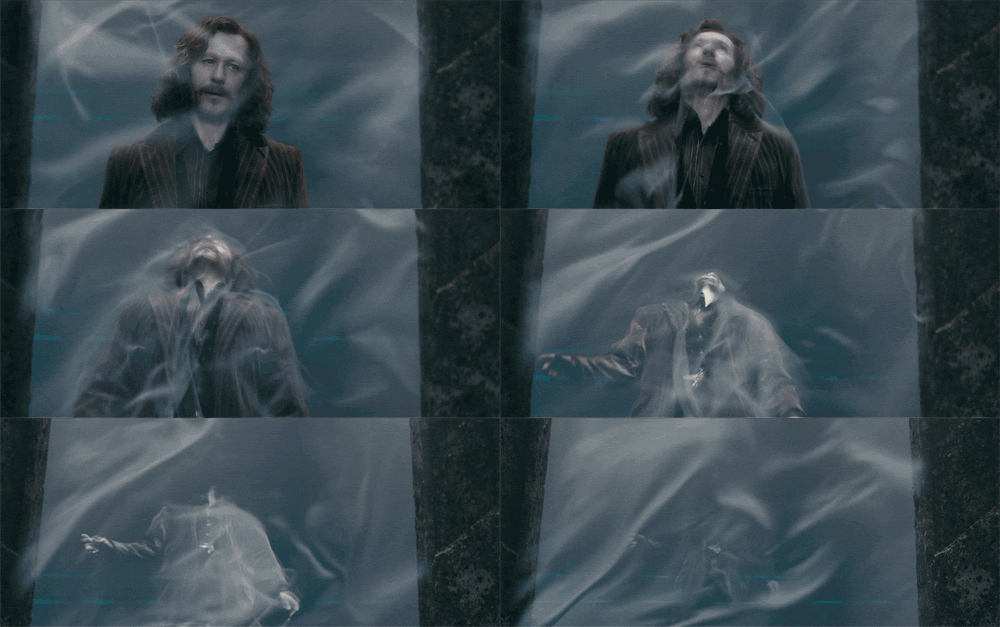
Every single one of those men either dies, or comes incredibly close to being offed before his time. In Harry Potter, James Potter's death is one of the events that sparks the entire plot. Arthur Weasley picks the wrong night to take guard duty and inadvertently ends up as a snake's midnight snack; interestingly enough, that run-in with Nagini in book five was supposed to be Arthur Weasley's ultimate demise, but J.K. Rowling realized that his death would leave her series completely devoid of decent fathers, and changed the outcome of the scene. Sirius Black stepped out of the blue to prove that good parents don't have to be your birth parents, and that even people from cartoonishly evil Nazi families can overcome their past, but all of that amounts to nothing when he suffers a tragic death by haunted curtain.

Bed, Bath & Beyond just got deadlier.

In The Casual Vacancy, Barry Fairbrother's death is the entire point of the book, and (There be spoilers up ahead, mateys), Howard Mollison suffers not one, but two attempts on his life... at the same time. This goes way beyond coincidence. If you're a father in the London area, try to avoid holding hands with your children in public, lest J.K. Rowling spot you and bludgeon you to death with her typewriter. 

Teenagers Meddling in Things They Do Not Understand

And now we come to the real underlying theme of J.K. Rowling's books. Harry Potter is essentially a seven-volume instruction manual for how to screw up absolutely everything and then stumble ass-first into success. It starts from the very first book. In Harry Potter and the Philosopher's Stone (Sorcerer's Stone, if you're south of the 49th), Harry is told, over and over again, to kindly stay the fuck away from the third floor corridor, because it's not entirely unreasonable for adults to want to keep an 11-year-old child away from a giant, feral 3-headed dog. 

Puppy! Er... puppies?

Of course, Harry the Wonder Boy doesn't listen, and promptly charges through Dumbledore's Seven Circles of Hell to retrieve the Philosopher's stone, defeat Voldemort and save the day. He's the hero here! Except... had Harry not intervened, Quirrel would have stared hopelessly at the mirror until Voldemort got bored and mind-crushed him. He had no way of getting it out. Harry is literally the only human capable of getting the stone, so if he never shows up, Voldemort's plot is still just as foiled. The outcome of the story is exactly the same if Harry isn't in it at all. 

Reminds me of someone else I know...

Harry's further exploits including playing with evil diaries when he's told not to, playing mind-footsie with Voldemort when he's told not to, and fighting the world's most evil snake lord behind Dumbledore's back when he's told not to, only to have other people swoop in at the last minute and help him save the day. But he and his friends aren't the only teens to stick their noses where they don't belong. The Casual Vacancy is the adultiest adult book ever, about adults doing adult things like holding elections and dying of brain aneurysms, and it's still chock-full of curious teenage meddlers. 

Growing up sucks, kids.

The entire plot of the novel is driven by shitty, shitty kids doing shitty, shitty things with consequences they can't even begin to comprehend. The book blurb may tell you that it's about a small town trying to throw an election to find a replacement for a dead town counselor, but don't be fooled; it's really about chronically unsupervised teens trying to find out what happens when they post their parents' secrets on the internet and make out with their friends' parents. 

So if you're anxiously awaiting the release of Miss Rowling's next masterpiece, you're welcome; I've already given you a sneak preview.

What other patterns have you noticed in your favourite books? Leave 'em in the comments. 
3

Over-Analyzing Harry Potter: Why Everything is Aunt Petunia's Fault

Buckle up, readers, because I'm about to take on the most beloved books the world has ever seen.

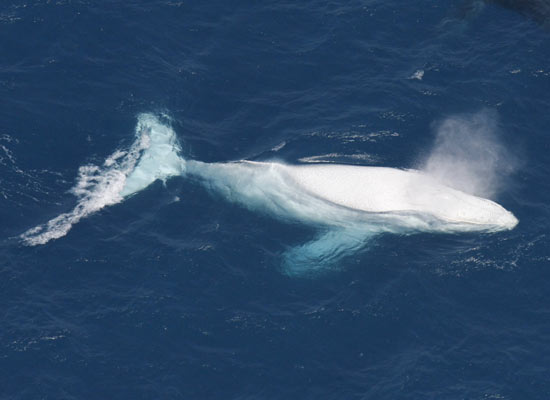
If you grew up in a literate, first-world family that didn't engage in ritual witch burnings, you've read Harry Potter. At the very least, you've seen the movies. If you were alive in the 1990s and you've made it this long without being exposed to the famous boy wizard, you are a statistical anomaly on par with the existence of an albino humpback whale.

This is you.

For all the albino whales and forgetful readers in my audience, here's a quick synopsis: Harry Potter is a seven-book series that tells the story of a bespectacled, cupboard-dwelling orphan with an AC/DC logo on his face who teams up with a redheaded welfare case and an encyclopedia with tits in order to defeat an immortal, snake-faced racist. The final book culminates in the deaths of approximately everyone, including Remus Lupin, Nymphadora Tonks, Lavender Brown, Fred Weasley, George Weasley's ear, Rufus Scrimgeour, Alastor Moody, Dobby the House Elf, Hedwig, Charity Burbage and a host of other characters whose names you don't recognize, Bathilda Bagshot, Vincent Crabbe, Nymphadora Tonks' father, a substantial number of Death Eaters who had it coming, Nagini, Colin Creevy, Severus Snape, Lord Voldemort, and your childhood. What the book fails to mention, however, is that every single one of those deaths could have been easily prevented by a single character: Harry's Aunt Petunia. 

This woman killed Dobby.

This might be a good time to mention that this post is absolutely lousy with spoilers, but c'mon guys, the last book came out in 2007. It's been seven years. Snape kills Dumbledore, and Harry is a Horcrux. You should know this by now. 

Also, they had bitchin' lightsaber battles, like, all the time.

Let's get right to it. At the start of the fifth book - Harry Potter and the Order of the Phoenix - Harry and his chunky cousin are strolling through suburban England when they're accosted by spooky, soul-sucking magical prison guards called Dementors. This is Dudley Dursley's first direct encounter with the magical world, and he reacts by running home to his mommy and throwing a spectacular hissy fit. That scene prompts the following exchange:

"De - men - tors," said Harry slowly and clearly. "Two of them."
"And what the ruddy hell are Dementors?"
"They guard the wizard prison, Azkaban," said Aunt Petunia.
Two seconds of ringing silence followed these words before Aunt Petunia clapped her hand over her mouth as though she had let slip a disgusting swear word. Uncle Vernon was goggling at her. Harry's brain reeled. Mrs. Figg was one thing - but Aunt Petunia?
"How d'you know that?" he asked her, astonished.
Aunt Petunia looked quite appalled with herself. She glanced at Uncle Vernon in fearful apology, then lowered her hand slightly to reveal her horsy teeth.
"I heard - that awful boy - telling her about them - years ago," she said jerkily.
"If you mean my mum and dad, why don't you use their names?" said Harry loudly, but Aunt Petunia ignored him. She seemed horribly flustered.

Gee, it seems awfully strange that Harry's aunt can't bring herself to name his parents. Rowling makes it clear throughout the series that the woman is going through life with a stick of generous circumference firmly lodged up her hindquarters, but surely even Petunia isn't too uptight to use her dead sister and brother-in-law's names. So why doesn't she just say Lily and James Potter?

Because she's not talking about James Potter.

I just wrote this post as an excuse to look up pictures of Alan Rickman.

When Harry takes a leisurely swim through the silvery goop of Snape's memories in the seventh book, the second memory he sees is a young Severus telling Lily all about Azkaban and Dementors while Petunia eavesdrops. In comparison to all the other life-changing memories Harry witnesses in the Pensieve, that one is relatively minor. The only reason that it's included is because J. K. Rowling has a lady-boner for keeping tiny details in her universe consistent. That 'awful boy' referenced in the fifth book wasn't Harry's father at all - it was Petunia's creepy neighbour, Severus Snape.

I wonder what other sorts of things Petunia caught them doing...

So let's go back to Petunia and Harry's little chat about Dementors. We know that Aunt Petunia is hyper-sensitive to criticism, and that there are approximately no circumstances in which she's willing to shut her big, horsey mouth for even a moment and stop talking. And yet, her hatred of magic is so strong, she's not even willing to continue the conversation long enough to let her own nephew know that she's not insulting his dead father. Its not as if Petunia has any reason to conceal Snape's identity. He started working at Hogwarts after Lily's death, and Harry's education isn't exactly discussed at the Dursley dinner table; she has no way of knowing that the 'awful boy' from her childhood grew up to be Harry's least favourite teacher. So in that one little phrase - "Aunt Petunia ignored him" - Mrs. Dursley damages her relationship with Harry, disrespects her dead sister's memory, alarms her son and husband, conceals the identity of a man she has no reason to protect, and sentences dozens of innocent people to die in the battle of Hogwarts. How?

If she had corrected Harry's assumption, he would have learned about the connection between his mother and Snape more than two years early. 

"Connection".

Remember, Harry is desperate for any link to his deceased parents, to the point that his 'deepest heart's desire', shown in the mirror of Erised, is just to be with them. There's no way that he would have overlooked Petunia mentioning "the Snape boy" - he's hungry for knowledge of his parents, and finding out that any teacher knew his mother as a child is something he'd be sure to follow up on. By this point in the fifth book, he already has plenty of information about his father; he's seen his awards, learned about his Quidditch career, met his friends, discovered his shape-shifting and acquired his map and cloak. Keep in mind, James Potter was only twenty-one years old when he died; Harry essentially knows his entire life story, and if there's anything he needs to know, he can ask Lupin and Sirius for more stories about that time they smuggled a ravenous werewolf under a homicidal tree. Everywhere Harry goes, adults blurt out "You're just like your father", as if it's a Tourettic tic. 

For Lily, however, Harry has nothing. The only person in Harry's life who spent substantial time with her when she was alive - her own sister - has no interest in talking about her, and Harry won't meet Professor Slughorn until book six. He knows nothing about her hobbies, achievements, classes or friends, and he doesn't have any of her old possessions. She might as well have been a pair of sentient eyeballs, because the only information Harry ever hears about her is that she was good at school and had the same remarkably noteworthy green eyes as him. 

Either it was really dark in Hogwarts, or all wizards suffer from blue-green colourblindness.

Finding out that Severus Snape was the only living connection to Lily's childhood and school days would have profoundly changed the nature of their relationship. Harry's desire for information constantly overthrows his common sense - he threw himself at a murderous tree in the middle of the night and snuck out to an abandoned shack to single-handedly confront a man he believed to be a dangerous mass murderer, just because he knew the man had a connection to his father. Harry changing his mind about Snape is not just idle speculation on my part, either; when Harry learns about it in book seven, it prompts him to name his freaking son Severus. Imagine the connection the two of them could have had if Snape had been alive to discuss Lily after the revelation, instead of being a dead husk of snake chow.

You monster.

Having a trusting relationship between Harry and Snape isn't all about Harry finding closure and emotional fulfillment, however. That wouldn't be worth writing about. What is worth writing about is that nearly every single bad thing that happens from book five onward could have been prevented if Harry had trusted Snape. Don't believe it? Let's start with Sirius Black. Specifically, with the death of Sirius Black.

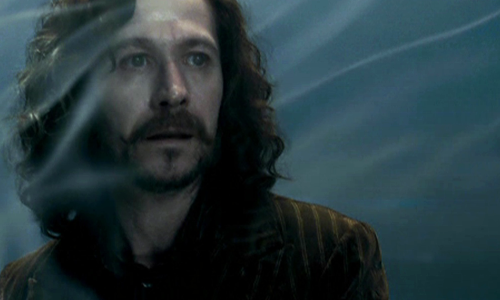
The only man ever killed by a mysterious archway.

Sometime during the fifth book, Voldemort figures out that he can do a Vulcan mind-meld with Harry, allowing the two of them to sense each other's thoughts and feelings. After Harry uses it to witness an attack and save Arthur Weasley's life, Voldemort realizes that the connection goes both ways. He then starts filling Harry's head with visions of a hallway filled with glass balls. Dumbledore doesn't feel comfortable having Wizard-Hitler rooting around in Harry's brain, and he orders Harry to start taking private Occlumency lessons with none other than Severus Snape.

"Private lessons".

The lessons go nowhere. Lack of trust and a bad memory viewed out of context lead to a complete breakdown, and Harry's mind remains completely vulnerable. Since Harry can't protect himself, Voldemort takes advantage of the mind-link and feeds Harry a fake memory of Sirius being tortured at the Department of Mysteries, luring Harry into an obvious trap that results in the death of his godfather. If Harry had had a chance to confront Snape about his childhood relationship with Lily and clear the air prior to starting Occlumency lessons, he might actually have been able to stick with them long enough to block the fake vision from getting in. 

Even if Harry's angsty teenage brain never did get the hang of Occlumency, he still could have prevented Sirius's death by trusting Snape. When Harry first has the vision, Hermione is clever enough to realize that they should verify that Sirius is in danger before they go skipping off to the ministry. Problem is, there isn't a member of the Order of the Phoenix handy. Dumbledore has been chased off, and McGonagall is in the hospital after being stunned to the tits by Umbridge's lackeys. That leaves Harry with absolutely no one to go to, except for maybe Severus Snape, a full-fledged member of the Order and a Death Eater double-agent, who could have easily told Harry that the vision was fake and ordered him back to his room to sip pumpkin juice and read page 394, because everything was fine. No one would have died. The only reason that Harry himself doesn't die in the fifth book is because Snape correctly interprets Harry's cryptic, half-garbled warning, based on a three-second conversation with an evil house elf.

As it turns out, this was not a reliable source of information.

Things only get worse from there. Having proven himself to be an impulsive and irresponsible shithead, and having completely alienated himself from Snape, Harry is not informed of Dumbledore's inevitable death or of the 'Snape kills Dumbledore so Voldemort doesn't get suspicious" plan. When the moment of Dumbledore's death actually arrives, Harry's blind hatred for his teacher leads him to completely misinterpret Dumbledore's "c'mon, seriously, you promised you'd do this" begging and Snape's "I would really rather not murder the only person who ever gave me a second chance" glare. 

"Thanks, bro, I owe you one." - Dumbledore

Harry's completely avoidable distrust of Snape culminates in the seventh book. Harry and friends spend most of the book camping out in the wilderness, gathering Horcruxes and destroying them with a sword that conveniently turns up in a nearby pond. Of course, the trio isn't nearly competent enough to be managing this all by their lonesome; though they don't know it, Snape is is babysitting them from afar the entire time, sneaking them help and sending his Patronus to lead them to things they need, like convenient pond-swords. Really, Snape has everything locked down; as Headmaster, he's exercising his power to keep Voldemort and the Death Eaters out of Hogwarts, preserving his students' safety while keeping them just miserable enough to be convincing. With Harry well on his way to destroying all of Voldemort's Horcruxes, all Snape really needs to do is keep sending help and bide his time until his master is left defenseless. 

Then Harry comes along and fucks it all up. 

Goddammit, Harry.

Things come to a head when Harry figures out that one of the last Horcruxes is probably Ravenclaw's diadem, but since Hogwarts isn't real big on vocabulary tests, he doesn't know what a diadem looks like. He decides that the only way to find out is to break into Hogwarts and stand around, undisguised, in the Ravenclaw common room. A passing Death-Eater-turned-teacher walks by and sounds the alarm, summoning Voldemort and crew to the castle and prompting the battle that brings out the truth about Lily and Snape, and results in the death of just about everybody. All because Harry and Snape didn't trust each other enough to realize that they were on the same side. 

Come on, guys, even Voldemort knew how to hug it out.

So, in summary: your favourite character died because Petunia Dursley was too stuck-up to admit that she'd heard a greasy poor boy talking to her sister once. She had a perfect opportunity to overcome Harry's pride and Snape's shame to unite them just in time to take down the world's most evil wizard together without all their friends and colleagues dying in the process, but instead, she chose to say nothing. At least Tom Riddle had a motive for all of the terrible things he caused, and paid the price for his actions. Petunia Dursley was just uptight and petty, and went about her life not knowing what she could have prevented. 

Yes, that makes Petunia worse than Voldemort.
13
Back to Top